Passenger cars
The validation gap
25 August 2026
25 August 2026
Wider energy options for cars as Latin America works towards a cleaner and more sustainable future

In the Latin American personal mobility market the key drivers for change are the new regulations being introduced to help improve air quality and reduce greenhouse gas emissions along with the desire to create a more sustainable future. Carolina Silva, Infineum Industry Liaison Advisor for Latin America, explores the light-duty vehicle landscape and assesses the impact these factors are having on powertrain electrification and fuel selection.
As reported in our previous article, Latin America is introducing emission reduction regulations and other initiatives as it works towards net zero and is transitioning to cleaner and more sustainable transportation powered by renewable energy sources. This article takes a deeper dive into the trends in the light-duty passenger car market that are being driven by the region’s air quality improvement, greenhouse gas reduction and sustainability ambitions.
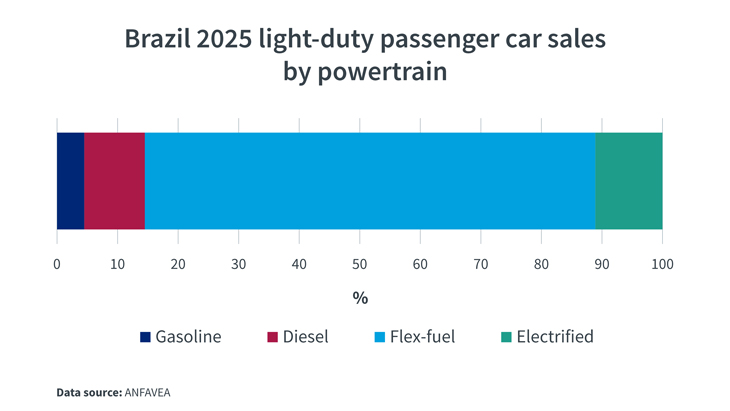
Brazil and Mexico are by far the two largest passenger car markets in the region. The Brazilian Association of Automotive Vehicle Manufacturers (ANFAVEA), reports almost two million sales of light-duty passenger cars in 2025, which although up 2.5% vs 2024 is below industry expectations. In terms of powertrain mix, flex-fuel vehicles dominate, holding more than 74% of the market.
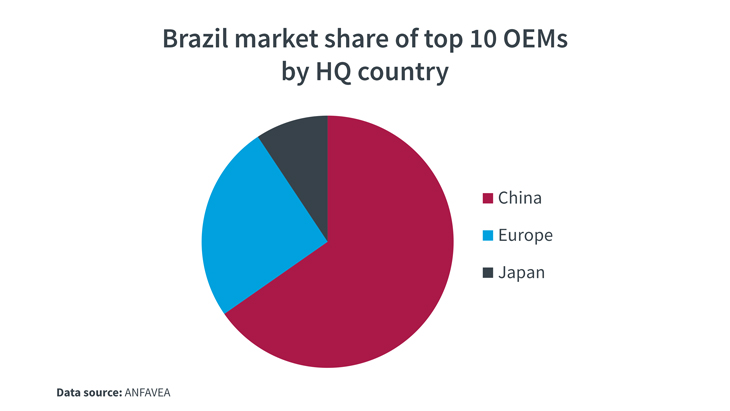
The leading passenger car OEMs in Brazil are Fiat, Volkswagen and GM, together holding just under 45% of the market. The passenger car vehicle fleet size was estimated to be over 39 million vehicles, with the average age of just over 11 years.
Sales growth continues in the first six months of 2026, with the association reporting over 1.08 million sales and saying it expects sales this year to reach the highest level since 2014.
In Mexico, reports from the Instituto Nacional de Estadística y Geografía (INEGI) indicate light-duty vehicle sales reached over 1.52 million in 2025, an increase of 1.3% over 2024. In the first half of 2026, INEGI reports continued growth with 754,394 light-duty vehicle sales, up 5.3% on the same period in 2025. The leading passenger car OEMs in Mexico are Nissan, GM and Volkswagen together accounting for 40% of sales in the data reported. However, these figures can only be viewed as estimates as the data, taken from the Administrative Registry of the Light Vehicle Automotive Industry (RAIAVL), consolidates results from 44 brands produced and/or sold in Mexico.
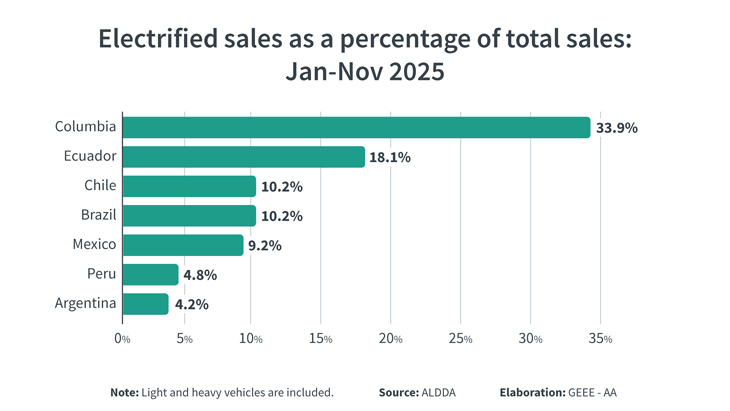
As the whole region works towards various decarbonisation and sustainability goals, the powertrain mix is changing. Each country is different in its trajectory and below is a close look at trends in Brazil and a snapshot of the markets of Mexico, Colombia, Chile, Peru and Argentina.
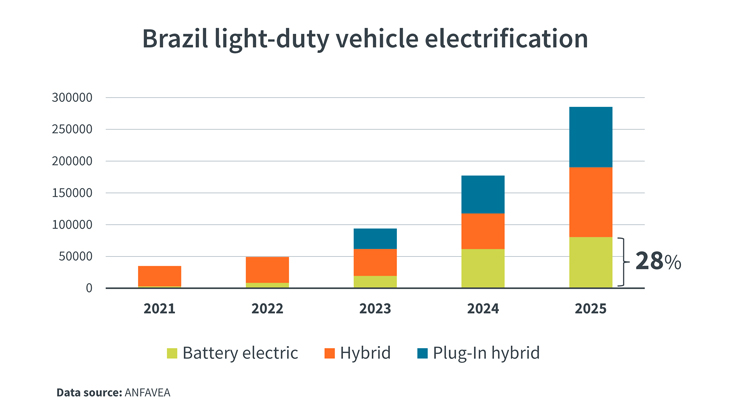
In Brazil, according to 2025 figures from ANFAVEA, which include light-duty passenger car and light-duty commercial vehicles, more than 285,000 electrified vehicles were sold. This represents a 60.9% increase over the previous year, while this is fast growth, since it comes from a relatively small base, it represents only 11% of the more than 2.55 million light-duty vehicles sold. Full battery electric vehicles (BEV) are less popular than hybrid models, which accounted for >70% of electrified sales.
The three top performing OEMs in this electrified segment, BYD, Fiat and GWM, accounted for 69% of the market in 2025, with Chinese OEMs really dominating this space.
With high consumer demand and tariffs in Brazil on foreign electric vehicles ramping up from 2024 (scheduled to reach 35% by 2026), Chinese OEMs are increasing their local production. BYD, for example, says it is investing R$5.5 billion (>1 billion USD) in its Camaçari complex, a massive facility that spans the equivalent of 645 football fields. Starting up with an annual capacity of 150,000 vehicles the company says it plans to scale up to 300,000 in the second phase. GWM says its new facility in São Paulo, which started up last year, will gradually increase annual production capacity from 20,000 to 50,000 vehicles.
Overall, 2025 was a record year of OEM investment in Brazil with some 20.6 billion USD being put into modernising existing factories and expanding existing facilities. Along with BYD and GWM, OEMs including BWM, Caoa Chery, GAC, GM, Honda, Hyundai, Mitsubishi, Nissan, Renault, Stellantis, Toyota and Volkswagen have announced local investments. In addition, Toyota, Stellantis, Volkswagen, and Honda have all announced local/national production of their electrified models.
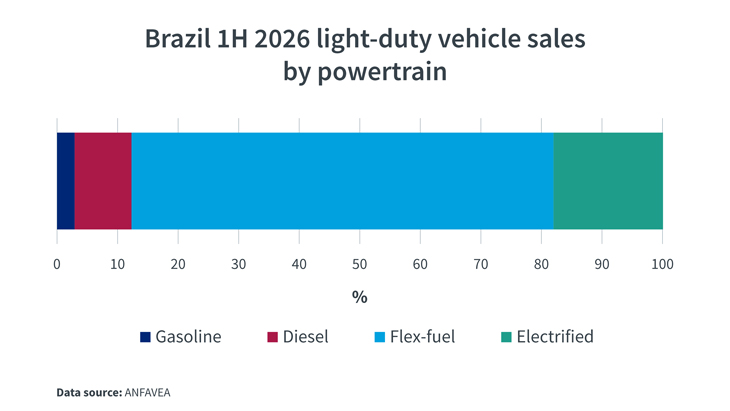
In the first half of 2026, almost 1.36 million light-duty vehicles were registered in Brazil, representing more than a 20% increase compared to the same period in 2025. Sales of gasoline vehicles are reported to be down, while electrified sales reached just over 18% of total light-duty vehicle sales. However, flex-fuel still dominates the vehicle landscape at ~70% market share.
In Mexico, public data from MarkLines indicate that the penetration of electrified vehicles is relatively low, and growth over the past four years has been almost flat. In 2025, internal combustion engine powered vehicles accounted for more than 87% of sales.
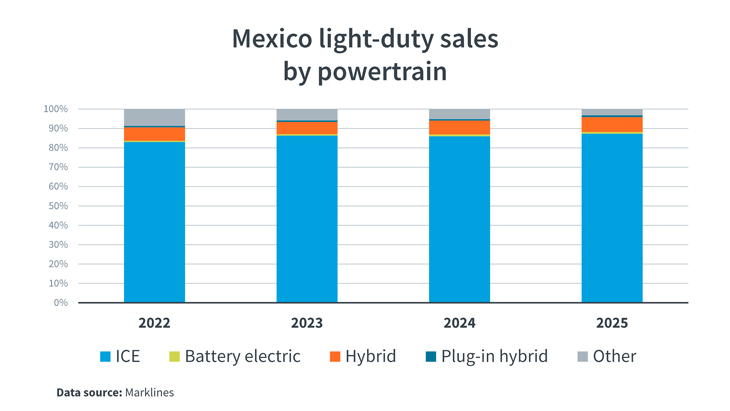
In the first half of 2026 more than 95,000 electrified vehicles were sold, representing a 44% increase compared to the same period in 2025, with non-plug-in hybrid models being the most popular choice. However, electrified models still represent only 12.6% of total vehicles sales. It is expected that the arrival of affordable models, particularly from Asian automakers, better financing availability, and higher consumer spending will contribute to the sector's future growth.
In Colombia, new vehicle sales recovered strongly in 2025. Over 254,000 new vehicles were reported to have been registered through the year, representing a 26.5% increase versus 2024.
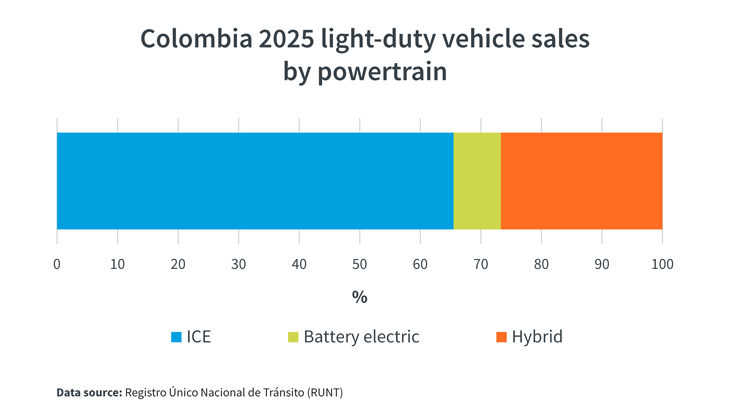
Hybrid electric vehicles (HEV) and BEV accounted for more than 30% of total sales in 2025, reaching more than 87,000 units. This means Colombia has the highest proportion of electric vehicle sales as a portion of overall light-duty vehicle sales in Latin America.
According to the International Energy Agency IEA the uptake of electric cars is largely the result of government incentives such as tax exemptions, reduced registration fees, a relaxation of traffic restrictions for electric vehicles, and relatively high fossil fuel prices. Continued growth across the sector is forecast in 2026.
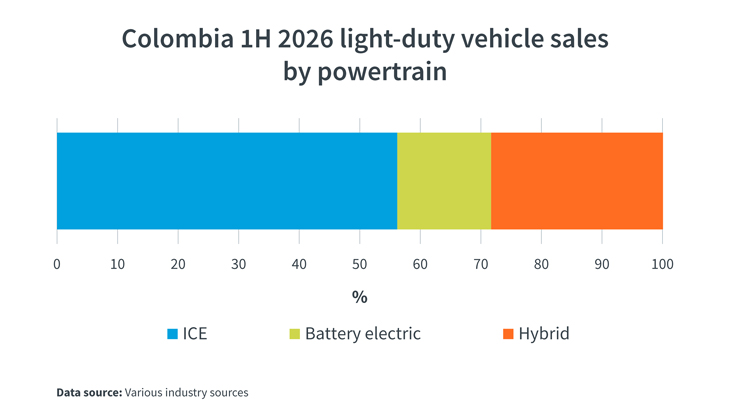
In the first half of 2026, the overall light-duty vehicle market reached 157,620 new registrations, up just over 50% versus the same period in 2025. Almost 40% of new vehicles registered were BEV or HEV, with sales growing 235.5% and 74.6% respectively year-on-year.
According to Asociación Nacional Automotriz de Chile (ANAC), the country saw a moderate recovery of light-duty vehicle sales in 2025, with the performance of zero and low emission vehicles improving. Sales of new energy light- and medium-duty vehicles reached 35,443 units by December, an 85.6% year-on-year increase and an 11.4% share of the total market, with most growth in non-plug-in models.
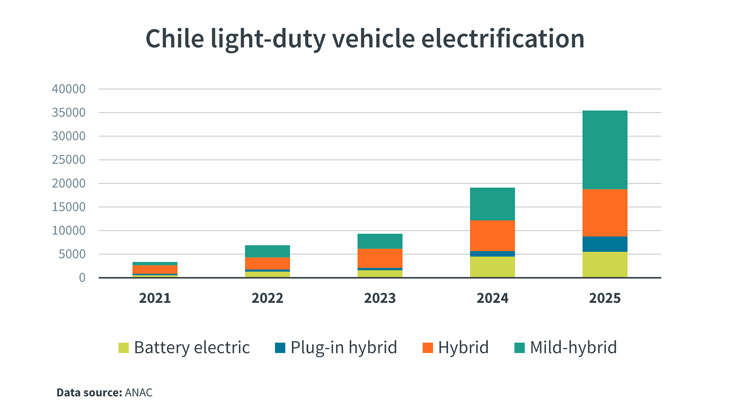
While further expansion is forecast in 2026, the major challenges to be overcome are lack of robust charging infrastructure and clear regulatory frameworks and long-term signals that provide clarity for consumers and investors.
In 2025, according to Asociación Automotriz del Perú (AAP), 186,981 light-duty vehicles were sold, a figure 23.8% higher than in 2024. However, only 3.5% of these sales were passenger cars, with the rest being larger SUVs, vans and pick-up trucks. The sales picture is dominated by two and three wheelers, where sales reached 296,489 and 129,395 units respectively in 2025.
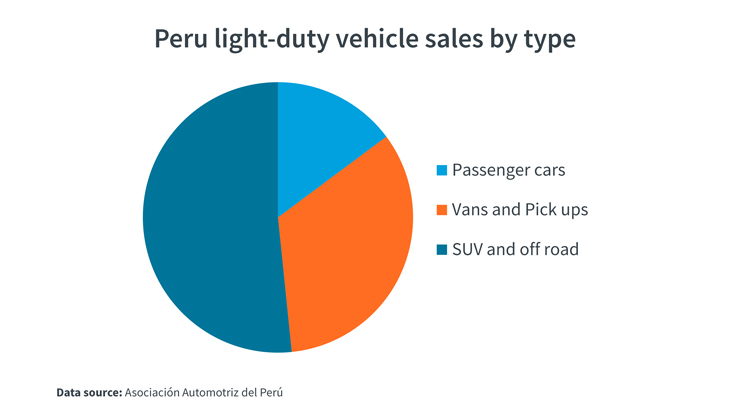
In terms of OEMs, Toyota leads the light-duty vehicle segment, holding some 20% market share, followed by Kia and Hyundai.
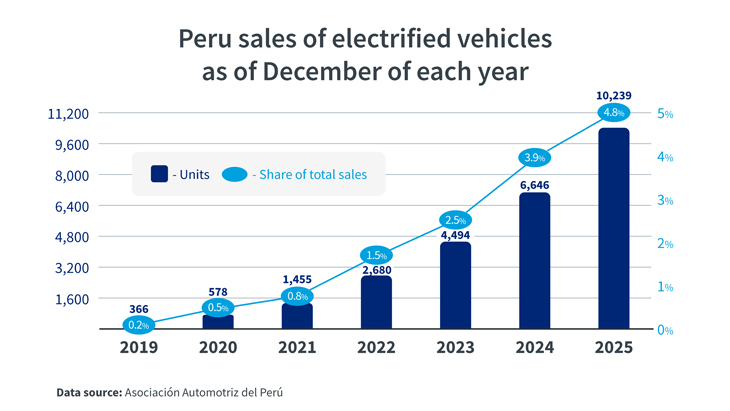
There is only a limited uptake of BEV and HEV in Peru, with 4.8% of sales being electrified in 2025. Toyota and Suzuki hold more than 55% of the electrified market.
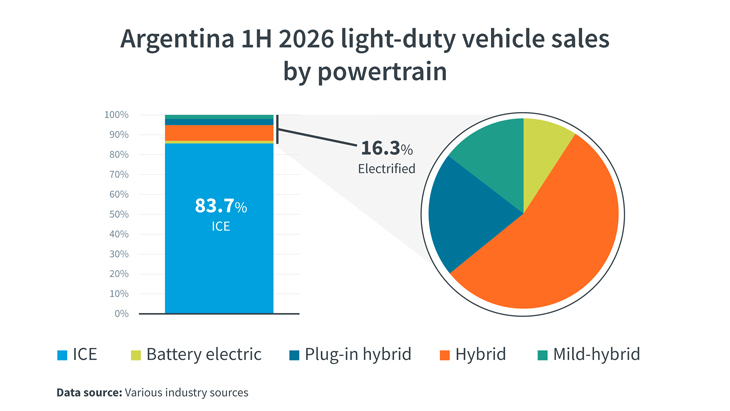
In 2025, some 580,000 light-duty vehicles were registered in Argentina, a strong annual increase vs 2024. Here the electrified segment represented around 4.6% of the market and within this segment hybrids gained a 76% share, with BEV accounting for 5%.
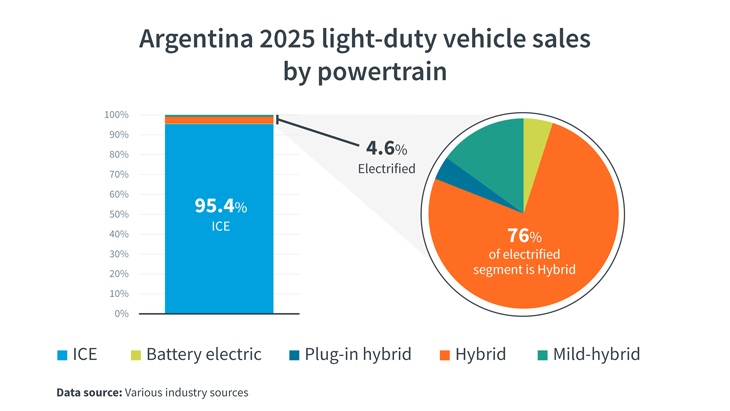
In the first half 2026, according to Asociación de Concesionarios de Automotores de la República Argentina (ACARA) and Sistema de Información Online del Mercado Automotor de Argentina (SIOMAA), more than 294,000 light-duty vehicles were registered in Argentina. Electrified registrations have surged over 339% year-on-year, from 9,613 units in 1H 2025 to over 42,000 in 1H 2026, with plug-in HEV becoming the second largest electrified technology segment, overtaking Mild HEV.
Latin America is a growing but fragmented market, which presents opportunities to global automotive and lubricant industry players. We will continue to monitor the market to see how the actions taken by the various governments, OEMs and other stakeholders impact the future vehicle landscape.
Infineum is committed to powering a greener future and continues working to help ensure the success of the market transition towards net zero. If you have any questions or need further details please contact us.
Our next Latin America instalment will take a closer look at the heavy-duty vehicle segment. Sign up here to receive email alerts so that you never miss out on new content from Infineum - and make sure you follow Infineum Additives on LinkedIn.
Sign up to receive monthly updates via email